
Tracking Lake County Recent Arrests
No single county page gathers every new Lake County arrest, current custody status, booking photo, and court outcome in one place. The Sheriff's Office splits that work across offices. For anyone believed to be in the Adult Corrections Facility right now, the official starting point is the Locate an Inmate page. It hands visitors off to the current vendor-hosted corrections search. An older county-hosted search frame still circulates online. Skip it; that version is obsolete.
Purpose picks the source. The live roster shows who is in custody at this moment. Illinois arrest-report law opens a request path for specified facts, though it creates no round-the-clock website. The Sheriff's weekly PDF summarizes dated incidents. The Circuit Clerk's docket picks up the case once charges reach court.
| Window | Best Lake County source | What it answers |
|---|---|---|
| Current | Locate an Inmate portal or Adult Corrections phone | Whether the person appears in county custody at the time checked |
| Same day | Roster, arresting agency, and records request | A practical check when no official 24-hour-only feed exists |
| Several days | Sheriff Weekly Arrest Summary | Incidents for a stated covered week, with detention and court fields |
| After filing | Lake County Circuit Clerk | Public case events and disposition, subject to access limits |
For same-day results, the 24 Hour Arrests guide lays out the fallback. The Arrest Log guide handles the multi-day publications instead.
Arrested Last Night in Lake County
Start with the official current-inmate search. An arrest from last night may not post right away. An empty result has several meanings. Release, transfer, a name spelled differently, or placement outside the facility can all hide someone. Adult Corrections can check a location at 847-377-4107, and the Corrections Division line is 847-377-4150. The arresting agency holds the incident record. Illinois law sets a deadline. Specified arrest-report information must be furnished as soon as practical, no later than 72 hours after arrest, within its stated limits.
Illinois VINE tracks one person's custody and case status. Registering an alert is a separate step from searching, and the service offers no photo roster or complete same-day list.
Search the Lake County Jail Roster
The county's official landing page links the corrections application used to locate people in Lake County Adult Corrections custody. That portal runs client-side. No county statement pins down its exact refresh interval, release persistence, pagination, or photo policy. Read what is on the screen at that moment. Older jail PDFs described fields that may not appear now. Assume nothing beyond what the interface shows.
| Search detail | How to treat it |
|---|---|
| Name or other visible search input | Use the labels on the live portal and try a careful spelling variation if needed |
| Booking or custody detail | A snapshot of county custody, not a court finding |
| Charge text | The charge recorded at booking, which may change later |
| Photo | Do not assume one is available unless the current result displays it |
| Update or status label | Note the displayed time and confirm urgent questions by phone |
Use the roster in a short sequence:
- Open the Sheriff’s county-hosted Locate an Inmate page before following its current search link.
- Enter only the identifying details the portal requests and compare possible matches carefully.
- Record the time of the search, because custody can change after bond, release, or transfer.
- Call Adult Corrections when a fresh booking, name mismatch, or Lake/McHenry placement may explain an empty result.
The Sheriff's Inmate Information page also links a daily population dashboard. That dashboard reports aggregate counts, not named people. The office's app offers tips, reports, and safety news. It lists no roster or booking-photo feature. The official Inmate Information page serves as the corrections contact point and the handoff to the search portal.
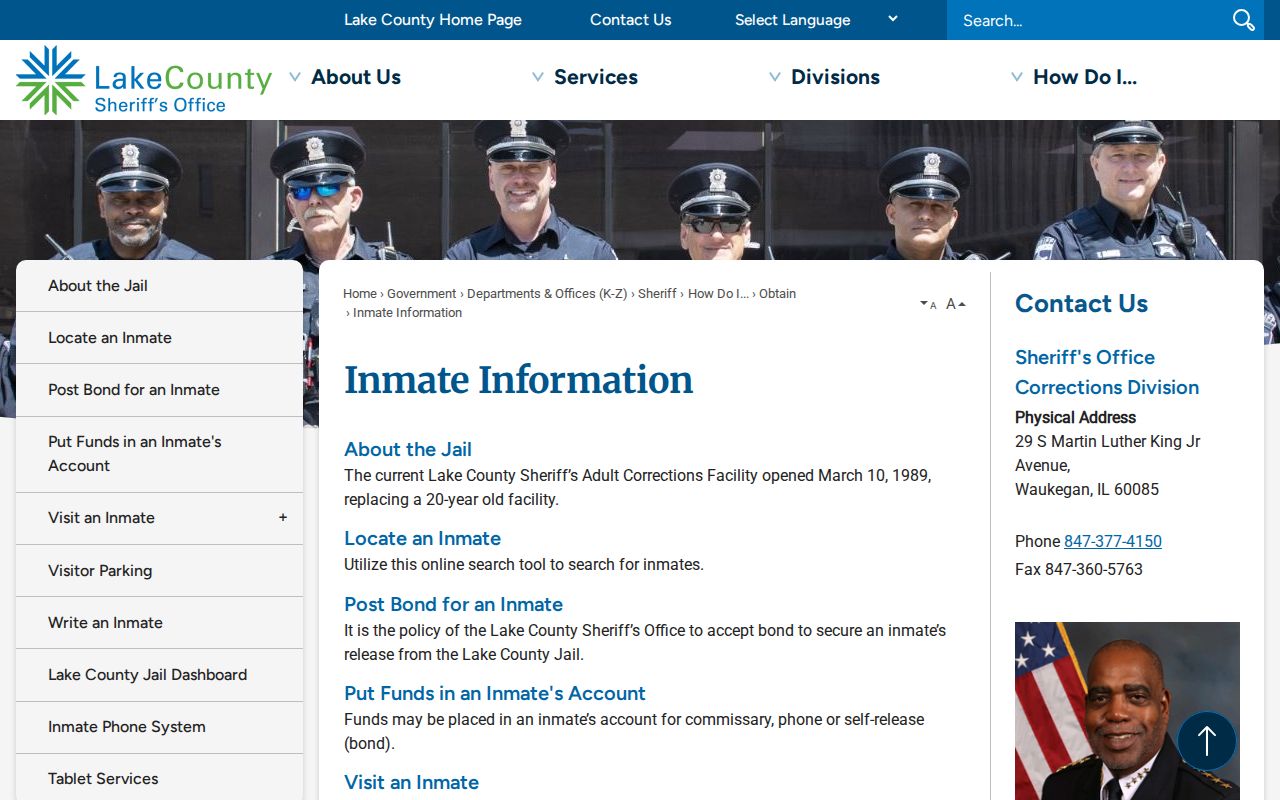
This image separates the county's official landing page from the vendor application it now opens.
Where Lake County Arrests Appear
Official sources lead for a reason. Each office controls a different part of the record. News outlets and commercial indexes can aid discovery, but their dates, labels, and images may lag or outlive the official status.
| Channel | Photo status | Authority and use |
|---|---|---|
| Lake County current-inmate portal | Current display not promised | Official current county-custody route |
| Sheriff weekly summary | No gallery treatment | Official multi-day incident publication |
| Arresting agency records | A targeted copy may be requested | Official report and booking-file custodian |
| Circuit Clerk portal | Not a booking-photo source | Official public case and docket route |
| Daily Herald and Lake and McHenry County Scanner | Story images vary | Selective editorial coverage, not a roster |
| RecentlyBooked, Busted Newspaper, Arrests.org, Mugshots.com, and Mugshots.zone | Varies by publisher | Unofficial imported indexes requiring official verification |
The Daily Herald Lake County crime section and Lake and McHenry County Scanner cover selected cases. Neither is a booking list. A news photo is not automatically a mugshot. Commercial pages add another risk. Duplicate, stale, or misattributed entries show up there, and a publisher's "booked" date should never override a current Sheriff or court record without checking the source and timestamp.
Recent Arrests by Lake County City
City and county records answer different questions. Waukegan Police keeps arrest-file material in its Bureau of Identification, but its public pages post no daily booking roster. Waukegan Recent Arrests maps that route and the county handoff. Mundelein works differently. Its police department publishes a weekly arrest blotter with event and court context. Mundelein Recent Arrests sorts blotter from jail custody. North Chicago's police page lists no dedicated arrest feed. So North Chicago Recent Arrests centers on the city FOIA route and the county search. A city arrest does not mean county jail custody.
Inside a Lake County Arrest Record
An arrest record begins with the arresting agency. Adult Corrections keeps the jail and booking material. The Circuit Clerk keeps the court case, and the files overlap without being interchangeable, so a complete answer may require more than one custodian.
| Field | What it shows |
|---|---|
| Name and identifying details | The person associated with the event; verify identity before drawing conclusions |
| Arrest date, time, and location | When and where the arrest was reported |
| Agency and report number | The likely custodian and reference used for a request |
| Booking number and time | The Adult Corrections intake event, if county booking occurred |
| Charge | The charge recorded at that stage |
| Bond or detention | The status shown when the source was prepared |
| Court date and courtroom | A scheduled case event that may later change |
| Booking photograph | An identification image that may be withheld or absent from public display |
What completes the story? The court docket and disposition show whether prosecutors filed a case and how it ended. A roster line or summary row stops short.
Lake County Arrest Photos and Mugshots
Does the Lake County inmate search show a booking photo? The portal does not say. It never states how long an image stays up, either. An older jail roster PDF carried a photo column. But that file tells you nothing about the live screen people use today. A search result may come back without a photo. A FOIA request to Adult Corrections can then ask whether the image exists and can be released. Standard exemptions still govern that answer, including juvenile limits and safety rules.
Illinois also splits access apart from publication. Under 5 ILCS 140/2.15, an agency must furnish listed arrest-report facts. The statutory window sets the timing. Yet subsection 2.15(e) bars law-enforcement social-media posts of booking photos for certain lower-level offenses. Exceptions apply. A commercial site that republishes a mugshot is not publishing the Sheriff's roster.
Read the Illinois arrest-information law in full below.
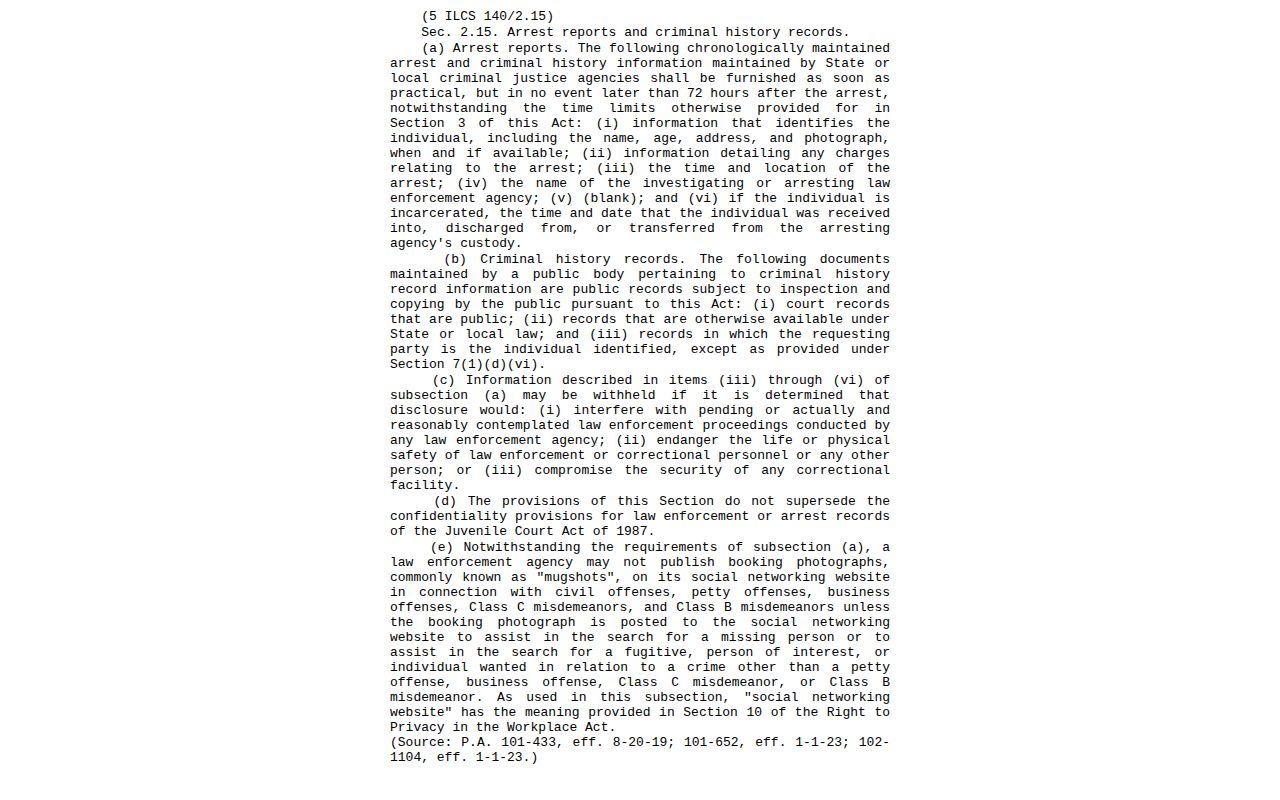
Trust the statute itself for the legal line. A private site's summary is a poor substitute. The Illinois Department of Corrections locator serves a different crowd: people in state prison or on parole. It may show an offender photo. That applies only in that state-custody setting, never for a fresh Lake County booking. The Federal Bureau of Prisons and ICE run their own locators for other systems. Neither counts as a Lake County mugshot source.
Request a Lake County Arrest Record
Pick the right office first. That choice depends on the record type. The Sheriff's Records Section handles Sheriff police reports at 847-377-4200. It asks requesters to wait five to seven business days before calling about a report. Booking and jail records go through Adult Corrections under its own FOIA route. A city police arrest usually starts with that city's records unit. The Circuit Clerk holds the case once filed.
- Identify the arresting agency, approximate arrest date, person’s name, and any report or booking number already known.
- Use the responsible office’s official FOIA form and describe the record narrowly, including a booking photograph only when it is actually needed.
- Ask for electronic delivery where available and wait for the office’s response about production, exemptions, or any lawful copying cost.
- Compare the produced record with the public docket because charges, dates, and outcomes can change after booking.
Illinois FOIA deadlines control how the agency responds. The Sheriff's five-to-seven-day guidance only signals when a police report may be ready for inquiry, not a guarantee of completion. Lake County publishes no fixed retention period for its booking files.
Illinois Arrest Records and Removal Law
Two Illinois statutes tackle two different problems. Section 2.15 of the Freedom of Information Act covers the listed arrest-report facts. It also sets the 72-hour furnishing rule, lawful withholding, juvenile limits, and curbs on some police social posts. 815 ILCS 505/2QQQ targets a different abuse. Publishers post arrest photos or details and then charge fees to remove or correct them. That statute bans the covered fee practice and sets correction duties along with exceptions. It leaves official arrest and court records untouched.
Illinois treats arrest records differently than many states. The anti-pay-to-remove provision in state law bars companies from charging to take down booking photos. That rule sits in the same statute covering expungement, 20 ILCS 2630/5.2. Eligibility and waiting periods turn on the offense and how the case ended. The Circuit Clerk's office posts an expungement filing page and offers approved statewide forms. Staff there cannot give legal advice. Anyone holding an expungement order should keep a certified copy and confirm which agencies received it.
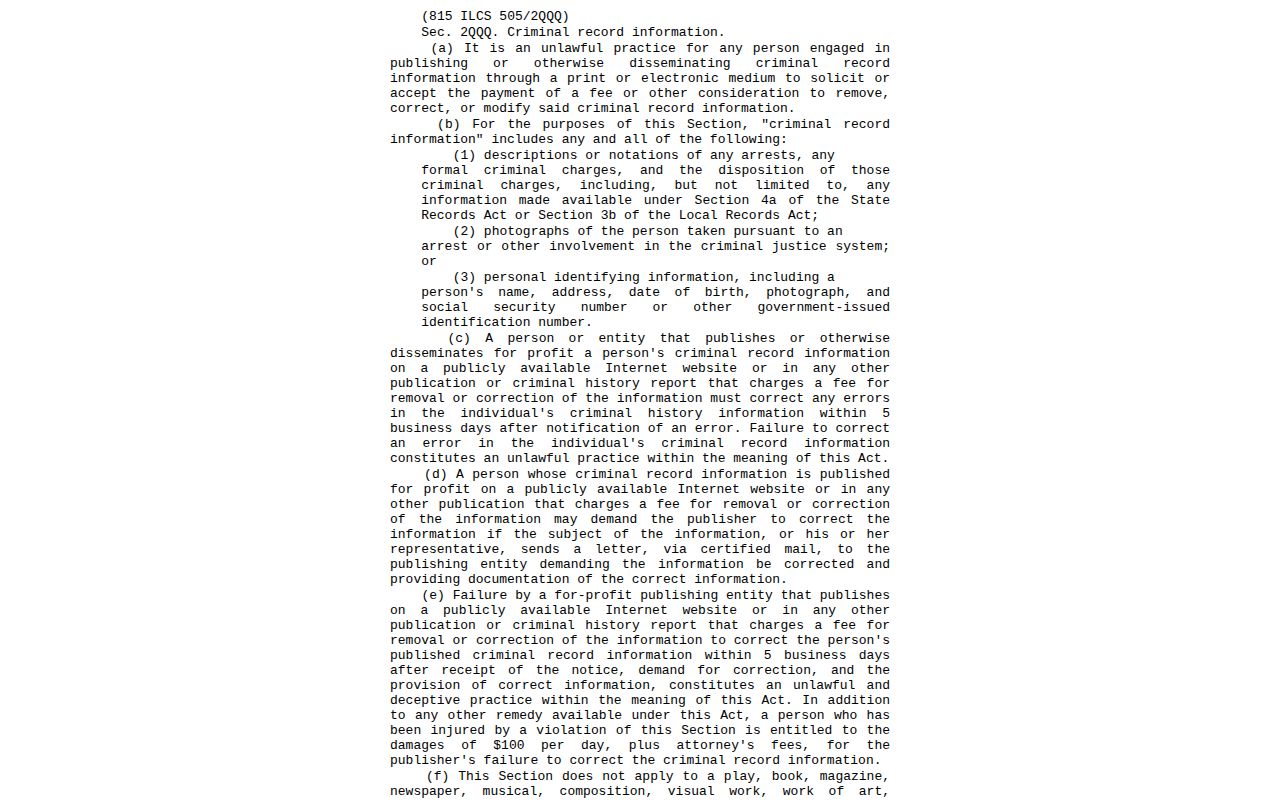
The statutory text shows why the official process and free correction routes matter more than a removal vendor's promises.
Lake County Arrest Warrants and Wanted Notices
The Sheriff's Warrant Information page notes that courts direct warrants. It also links the active-warrant PDF. A listing can be recalled, canceled, resolved, or built on stale facts. So confirm status with the Sheriff or the court. A lawyer is the right person to consult about a warrant with your name on it. Lake County also runs a Most Wanted Sex Offenders page aimed at noncompliance and outstanding warrants. That page is not a recent-arrests list. Never copy its subjects into another gallery. Never approach or try to apprehend anyone on it. Call 911 for an immediate threat, or use the official tip contacts for anything less urgent.
The official warrant guidance below keeps the court and Sheriff roles clear.
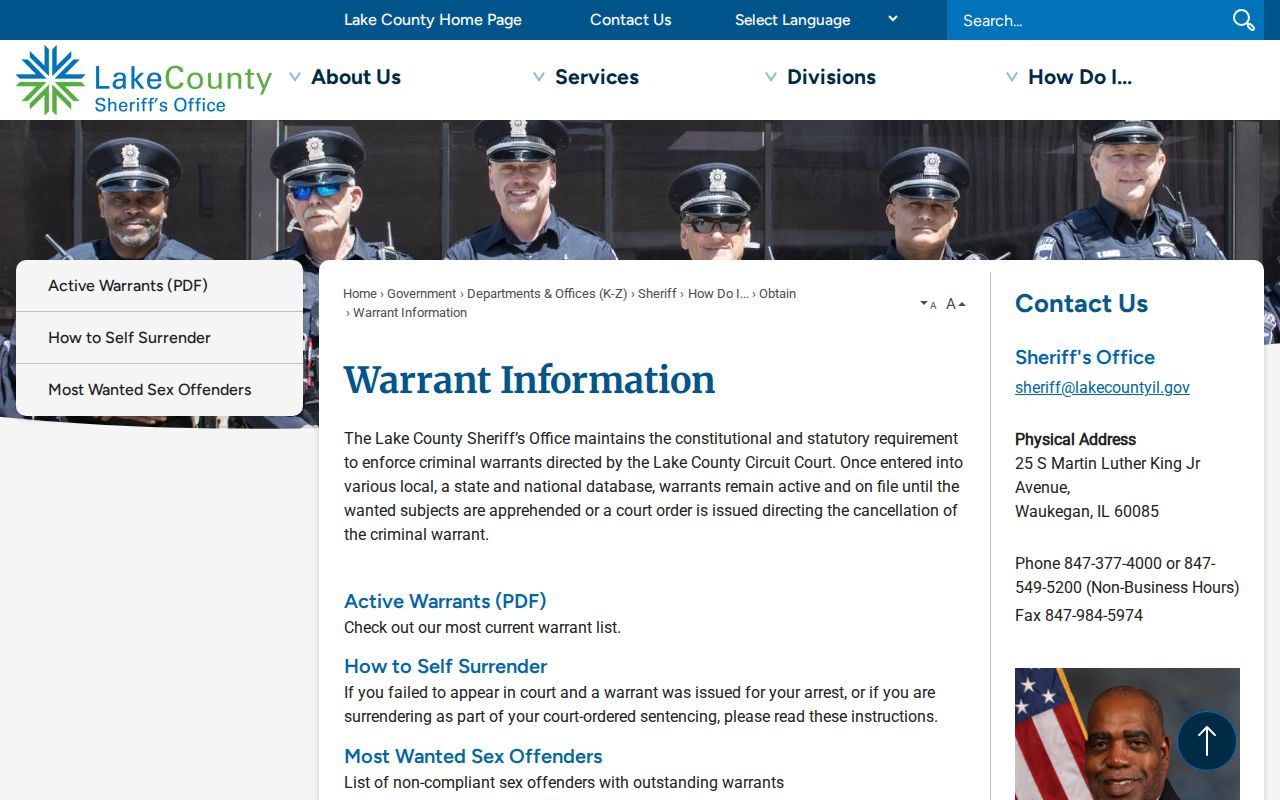
The county's guidance offers a safe way to verify a warrant without reproducing names or dodging law enforcement.
After a Lake County Arrest
A Lake County arrest starts a chain: booking, first appearance, bond review, prosecution, and disposition. Each step lands in a different record. The weekly summary may print a future court time and detention status. Both reflect what stood on its issue date. The Circuit Clerk's public search spans criminal, traffic, and civil cases, while juvenile records stay restricted. Some portal functions require registration, and it does not hand over every document.
Charges can change. A docket read with its dates tells you more than an old arrest row ever will. When two sources disagree, compare timestamps and scope before trusting either one.
So the official handoff has three layers. The inmate portal shows custody now. The Sheriff or a city department documents the arrest event. The Circuit Clerk carries the filed case.
Lake County Custody Beyond the Jail
State and federal custody live on separate systems. An Illinois prison sentence moves a person into the Illinois Department of Corrections Individual in Custody Search. That database covers current inmates and parole records. It may include an IDOC image, but it does not confirm a new Lake County arrest. Older state files may need an IDOC archive request. The Federal Bureau of Prisons locator finds federal prisoners by name or register number, and it offers no public booking-photo field. ICE's detainee locator takes an A-number with country of birth, or a name, date of birth, and country. U.S. Marshals guidance is blunt. Prisoner information and photographs are generally not released through a person-search tool, though an appropriate records request may be considered. None of that replaces the Lake County roster.
How Lake County Records Persist
Custody status and paperwork age at different speeds. The live portal can shift after a release or transfer. Paper trails hang around longer. A weekly Sheriff PDF can sit in the press-release archive long after custody ends, and the court docket keeps logging case events. Private copies last longer still, or they fail to reflect an official correction. History runs deep here. The Illinois State Archives holds Lake County jail registers from 1930 through 1941 and North Chicago jail registers from 1965 through 1971. Those old books prove records exist. They are not current feeds, and they set no booking-file retention schedule. The Local Records Commission authorizes retention and disposal for local government, so ask Adult Corrections for the current schedule instead of assuming a fixed number of years. The Sheriff press-release archive shows the split clearly.
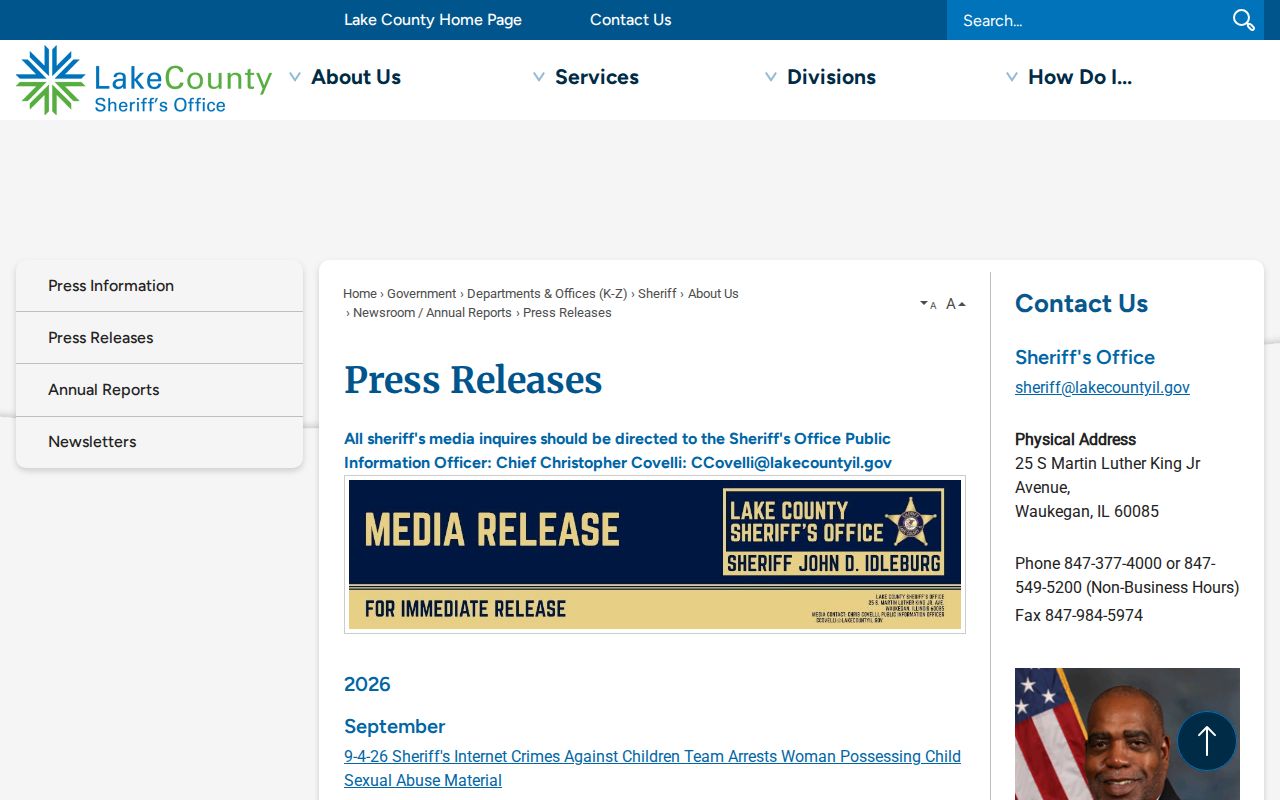
For the weeks it covers, the archive helps. A stored summary still cannot confirm who sits in a Lake County cell today.